BOOKS
The Urban Oasis as a Vision of Dwelling
In the books written by Pietro Laureano, a profound guiding thread emerges: the search for a model of city capable of reconciling nature and culture, memory and innovation, technique and community. It is not a nostalgic return to the past, but the rediscovery of a structural principle that runs through traditional civilizations: the oasis as a complete form of dwelling.
The oasis is not merely a place in the desert. It is an integrated system in which water, soil, vegetation, architecture, and community form a single organism. It is the point where scarcity generates intelligence, where climatic limits produce ecological harmony and social cohesion.
Today, this logic becomes the foundation of the Urban Oasis project: a model of city that overcomes the separation between built and natural environments, between urban and rural, between production and everyday life — a lesson that is fundamental for contemporary urban regeneration programs.
Modern cities suffer from fragmentation, soil sealing, loss of biodiversity, and social anonymity. The Urban Oasis instead proposes a new multidimensional urbanism: vertical (from atmosphere to ground and subsoil), cyclical (based on the reuse of resources), and social (grounded in participation and multiculturalism).
The city becomes a garden, green infrastructure, water-harvesting surface, and a place of integrated artisanal and agricultural production. Not a space merely decorated with greenery, but an inhabited ecosystem.
In Pietro Laureano’s books, this vision arises from the study of desert oases, historic landscapes, traditional water-management techniques, and urban microclimates. These experiences demonstrate that it is possible to dwell in a frugal, resilient, and harmonious way even under extreme conditions.
The Urban Oasis is the contemporary realization of this legacy:
a strategy to address climate change, regenerate abandoned spaces, restore community identity, and build cities capable of self-sufficiency and beauty. This vision takes concrete form in the successful projects conducted by IPOGEA in various parts of the world, including Matera (Italy), Al-Ula (Saudi Arabia), Petra (Jordan), Lalibela (Ethiopia), Shusha (Azerbaijan), Adrar (Algeria), and Errachidia (Morocco).
Not a utopia, but a method.
Not simply a green project, but a new way of inhabiting the planet.
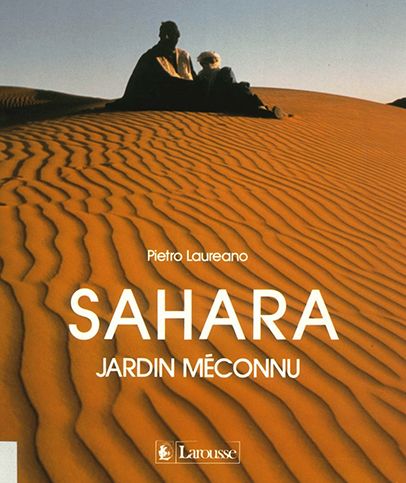
Sahara, Jardin méconnu
Une vision totalement nouvelle du Sahara qui surprendra le lecteur: s’il existe un paradis perdu, c’est bien ce désert, jadis jardin de paix et de délices, et encore aujourd’hui gardien d’un savoir ancien. Par la force de ses arguments, ainsi que grâce à de magnifiques planches et à des photographies originales, ce livre révèle un Sahara riche de vie, d’histoire et de culture, lieu privilégié de l’expérience humaine où l’on peut retrouver les origines profondes de chacun de nous.
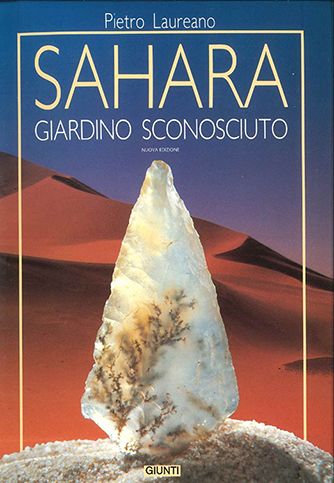
Sahara, Giardino Sconosciuto
Sahara. Giardino sconosciuto è un libro affascinante in cui Pietro Laureano rovescia l’immagine del deserto come luogo sterile e inospitale, rivelandolo invece come un paesaggio ricco di vita, storia e cultura, custode di tecniche millenarie di gestione dell’acqua e di saggezza ecologica. Con analisi approfondite, fotografie e mappe, l’autore esplora il Sahara come un giardino segreto della civiltà, dove oasi e insediamenti umani testimoniano l’ingegno e la resilienza delle popolazioni che vi hanno abitato.
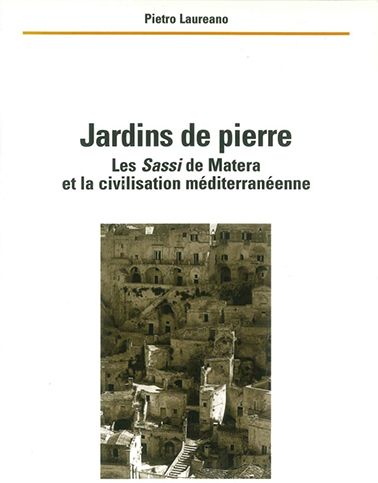
Jardins de Pierre: Les Sassi de Matera et la civilisation méditerranéenne
De la honte nationale au patrimoine de l’humanité. Tel est le parcours, unique au monde, des Sassi de Matera.
La ville de pierre, qui était encore décrite dans les chroniques du XVIᵉ siècle comme « dotée d’un air salubre et habitée par des hommes ingénieux », s’est ensuite transformée, dans l’impact destructeur de la modernité, en symbole de la dégradation du Mezzogiorno. Le fragile écosystème des maisons-grottes ne semblait pas pouvoir survivre à la misère, à la vétusté et au dépeuplement, et un destin de ruine l’attendait…
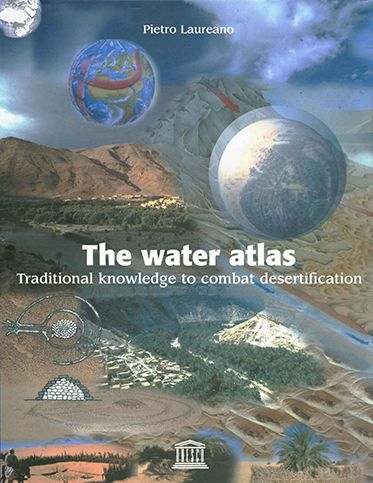
Water Atlas: Traditional knowledge to combat desertification<br>
Due to climate change and human activities, desertification is among the most serious problems affecting humankind in the roughly 110 countries where deforestation, overgrazing, and unsuitable agricultural practices are causing a rapid process of land degradation. Even in other parts of the world, desertification leads to biodiversity loss and triggers economic, social, and political tensions. In recent years, this phenomenon has been the subject of a series of studies focusing on the recognition of the value of traditional techniques through which local communities, over the centuries, have managed to adapt to hostile environments.
Sahara, Jardin méconnu
Une vision totalement nouvelle du Sahara qui surprendra le lecteur: s’il existe un paradis perdu, c’est bien ce désert, jadis jardin de paix et de délices, et encore aujourd’hui gardien d’un savoir ancien. Par la force de ses arguments, ainsi que grâce à de magnifiques planches et à des photographies originales, ce livre révèle un Sahara riche de vie, d’histoire et de culture, lieu privilégié de l’expérience humaine où l’on peut retrouver les origines profondes de chacun de nous.
Sahara, Giardino Sconosciuto
Sahara. Giardino sconosciuto è un libro affascinante in cui Pietro Laureano rovescia l’immagine del deserto come luogo sterile e inospitale, rivelandolo invece come un paesaggio ricco di vita, storia e cultura, custode di tecniche millenarie di gestione dell’acqua e di saggezza ecologica. Con analisi approfondite, fotografie e mappe, l’autore esplora il Sahara come un giardino segreto della civiltà, dove oasi e insediamenti umani testimoniano l’ingegno e la resilienza delle popolazioni che vi hanno abitato.
Jardins de Pierre: Les Sassi de Matera et la civilisation méditerranéenne
De la honte nationale au patrimoine de l’humanité. Tel est le parcours, unique au monde, des Sassi de Matera.
La ville de pierre, qui était encore décrite dans les chroniques du XVIᵉ siècle comme « dotée d’un air salubre et habitée par des hommes ingénieux », s’est ensuite transformée, dans l’impact destructeur de la modernité, en symbole de la dégradation du Mezzogiorno. Le fragile écosystème des maisons-grottes ne semblait pas pouvoir survivre à la misère, à la vétusté et au dépeuplement, et un destin de ruine l’attendait…
Water Atlas: Traditional knowledge to combat desertification
Due to climate change and human activities, desertification is among the most serious problems affecting humankind in the roughly 110 countries where deforestation, overgrazing, and unsuitable agricultural practices are causing a rapid process of land degradation. Even in other parts of the world, desertification leads to biodiversity loss and triggers economic, social, and political tensions. In recent years, this phenomenon has been the subject of a series of studies focusing on the recognition of the value of traditional techniques through which local communities, over the centuries, have managed to adapt to hostile environments.

Pietro Laureano
Pietro Laureano, director and coordinator of Ipogea, was the author of the report that led to the inclusion of Matera in the UNESCO World Heritage list. It is also responsible for the inclusion of the National Park of Cilento, with the archaeological sites of Paestum and Velia, in the list of World Heritage Sites.
He was a member of the UNESCO team who developed the Masterplan of Major Petra (Jordan), and is a team leader in the UNESCO conservation campaign for archaeological monuments in Lalibela (Ethiopia).
He is director, coordinator and project of the archaeological park of Gravina in Puglia, and has designed plans for important archaeological sites and parks on Italian and international level.
He is the author of the methodology for the implementation of UNESCO sites management plans.
Ipogea is recognized by the European Union as an organization of excellence in the protection and enhancement of European cultural heritage, has been an associate member of ICCROM (International Center for the Study of Cultural Heritage Conservation and Restoration) and executes projects on behalf of the World Monuments Found.